mood rings


 Locked


 
|
The Science and Meaning Behind MoodRingColors Mood Rings
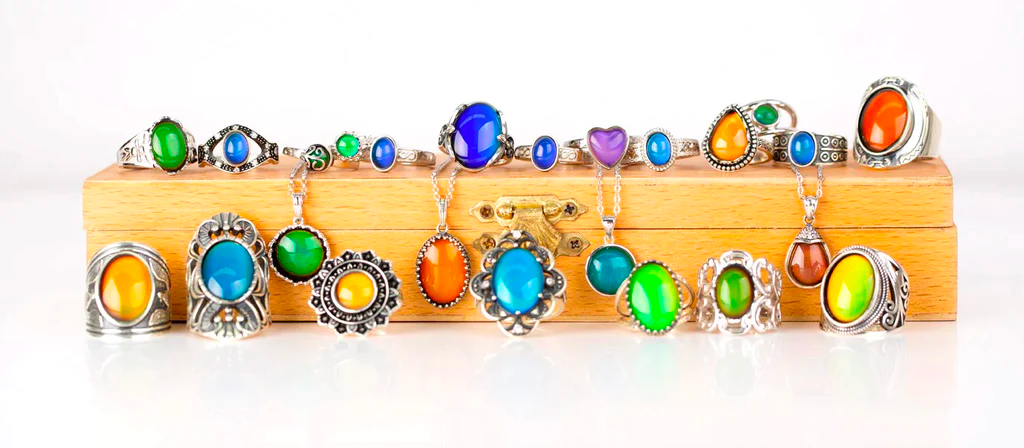 Mood rings are more than nostalgic jewelry from the 1970s—they’re colorful, eye‑catching accessories that fascinate people of all ages. Many wonder how mood rings work, what the colors mean, and whether they can really detect emotions. This guide explains the science, history, meanings, and care tips for mood rings in clear, search‑friendly detail. ## What Is a Mood Ring? A mood ring is a piece of jewelry—usually a ring, but sometimes a necklace or bracelet—that changes color in response to temperature. The shifting colors are marketed as indicators of your current mood or emotional state. Common forms include: - Classic metal band with a color-changing stone - Adjustable fashion rings for kids and teens - Mood necklaces, chokers, and pendants - Mood bracelets and anklets ## How Do Mood Rings Work? Mood rings rely on **thermochromic materials**—substances that change color when exposed to different temperatures. The key components are: ### 1. Liquid Crystals Inside the “stone” of a mood ring is a thin layer of **liquid crystals**, sandwiched between glass or plastic. These crystals: - React sensitively to small temperature changes - Twist or change structure as the temperature shifts - Reflect different wavelengths (colors) of light at different temperatures ### 2. Body Temperature Your finger’s surface temperature slightly changes based on: - Blood flow - Stress and relaxation - External temperature (weather, room temperature, water) The ring doesn’t read your emotions directly; it reads **skin temperature**, which often correlates loosely with emotional states. For example: - Stress or fear can cause your extremities to cool as blood moves to core organs. - Relaxation or happiness can increase circulation and warm your hands. ## Mood Ring Color Chart and Meanings Each manufacturer uses its own formula, but most mood rings follow a similar pattern. Below is a common **mood ring color chart** and what the colors are said to represent: - **Black** – Stressed, tense, overwhelmed, or (if not worn) the ring is too cold or damaged - **Brown / Gray** – Nervous, anxious, unsettled, negative mood - **Yellow** – Mixed feelings, curious, uneasy, or mentally active - **Green** – Normal, calm, relaxed, no strong emotion; “baseline” mood - **Blue-Green / Teal** – Content, peaceful, slightly happy and relaxed - **Blue** – Happy, at ease, comfortable, optimistic - **Dark Blue / Indigo** – Deeply relaxed, affectionate, romantic, or dreamy - **Purple / Violet** – Passionate, excited, creative, or highly energized - **Red** – Energized, adventurous, aroused, or intense emotion (anger or passion) - **Pink** – Playful, flirty, mildly excited or joyful Use this chart as a fun guide, not a medical or psychological diagnosis. Different brands may shift some meanings. ## Do Mood Rings Really Work? Mood rings **do** change color accurately based on temperature, but they **do not scientifically read your mind or emotions**. What they actually measure: - **Finger temperature** affected by: - Ambient temperature (hot or cold air) - Recent activity (exercise, holding warm or cold objects) - Circulation changes tied to stress or relaxation Because emotions sometimes affect circulation, there can be a loose connection between **mood and color**, but it’s not precise or guaranteed. In short: - Scientifically, mood rings are **temperature indicators**. - Culturally, they’re used as **fun mood indicators**. ## A Brief History of Mood Rings Mood rings were invented in the early **1970s** by New York jewelry designers who used thermochromic liquid crystals in rings. They quickly became a fashion craze: - Popular in the 1970s as “biofeedback jewelry” - Revived in the 1990s and 2000s with retro and alternative fashion - Continued popularity online today as novelty gifts and accessories Their enduring appeal comes from: - Bright, shifting colors - Personal, “mystical” feel - Low cost and wide availability - Nostalgia and retro charm ## Types of Mood Rings and Styles Modern mood rings come in many designs and price ranges, including: - **Classic bands** – Simple, metal band with a color-changing center - **Statement rings** – Larger stones, vintage or gothic styles - **Kids’ mood rings** – Adjustable bands, bright shapes like hearts, stars, animals - **Minimalist mood rings** – Thin bands with small color-changing accents - **Mood ring sets** – Matching rings for friends, couples, or families - **Hypoallergenic options** – Stainless steel, titanium, or coated metals for sensitive skin You can also find mood jewelry in: - Necklaces and pendants - Bracelets and bangles - Earrings and body jewelry ## How to Choose a Mood Ring When shopping for a mood ring, consider: 1. **Material** - Look for **stainless steel**, **titanium**, or **sterling silver** if you have sensitive skin. - Avoid cheap alloys if you’re prone to irritation. 2. **Size and Fit** - A snug but comfortable fit provides better contact with your skin, helping the ring respond more accurately to temperature changes. 3. **Quality of the Crystal** - Higher-quality liquid crystals change color smoothly and show more distinct shades. - Very cheap rings may have limited or muddy colors. 4. **Style** - Choose everyday designs for casual wear. - Pick bolder statement rings for a standout look or gifts. 5. **Price** - Most fashion mood rings are very affordable. - Premium versions may use better metals, craftsmanship, or brand packaging. ## How to Care for a Mood Ring Mood rings are delicate because the liquid crystal layer can be damaged by moisture, heat, or harsh chemicals. To extend your ring’s life: - **Avoid water**: - Remove before swimming, showering, or washing dishes. - **Keep away from heat**: - Don’t leave it in a hot car or near heaters. - **Protect from chemicals**: - Take it off before using cleaning products, perfume, or lotions. - **Store properly**: - Keep in a jewelry box or soft pouch away from direct sunlight. - **Avoid scratches**: - The “stone” surface can scratch; avoid rough handling or stacking with abrasive jewelry. If your mood ring turns permanently **black** and doesn’t change color, the liquid crystals may be damaged beyond repair. ## Are Mood Rings Safe? Mood rings are generally safe for everyday wear. To stay comfortable and avoid issues: - Check for **nickel content** if you have metal allergies. - Avoid wearing if you develop a rash or itch; switch to hypoallergenic materials. - Keep small rings away from very young children who might put them in their mouths. The thermochromic materials are sealed inside the ring, so they should not contact your skin under normal use. ## Fun Ways to Use Mood Rings People enjoy mood rings for more than just fashion. Some fun uses include: - **Conversation starters** – Friends compare ring colors and moods. - **Mindfulness reminders** – Use color changes as prompts to notice how you feel. - **Party favors or stocking stuffers** – Affordable, nostalgic gifts for all ages. - **Couple or friendship rings** – Matching mood rings as symbolic accessories. - **Classroom or group activities** – Lighthearted demonstrations about temperature and circulation. ## Common Questions About Mood Rings **Why is my mood ring always black?** It could be: - Very cold environment - Poor contact with your skin - Damage to the liquid crystals (often permanent) **Can mood rings predict my emotions?** No. They react to **temperature**, which can be influenced by emotions but also by many other factors. **Do mood rings work on everyone?** Yes, but: - If your hands are usually cold, your ring may stay in darker shades. - Fit, environment, and health can all affect how dramatically the colors change. **Are expensive mood rings more accurate?** More expensive rings may: - Use higher-quality materials and crystals - Last longer and show smoother color transitions They’re not medically more “accurate” at reading mood, only better as temperature-based color indicators. What Does Blue Mean on a Mood Ring<br> What Does Green Mean On A Mood Ring<br> what does purple mean on a mood ring<br> How Do Mood Rings Work<br><br><br> Mood rings combine simple science with a sense of magic. While they’re not true mood detectors, they are unique pieces of thermochromic jewelry that respond to your body’s temperature and environment. Whether you wear one for style, nostalgia, or fun, understanding how mood rings work and what the colors mean makes them even more enjoyable to use and share. |
«
Return to (DEPRECATED) Apache Flink Mailing List archive.
|
1 view|%1 views
| Free forum by Nabble | Edit this page |